🔍 Section 1: Why It’s Required — Especially in the VLSI/Semiconductor Industry
1. 🧠 Theory Without Concepts is Holding Students Back
Most college courses are theory-heavy, but lack proper conceptual grounding. Students often memorize equations and circuit without understanding why or how things work.
For example, many students know what an NMOS is, but can’t explain how it behaves across PVT corners or how it’s modeled in SPICE.
Sometime they are aware of simulation but no idea what’s model file.
In VLSI, clarity of fundamentals—like setup/hold timing, parasitic extraction, or standard cell concepts—is non-negotiable.
A placement-oriented program focuses on clearing conceptual confusion so students can think like engineers, not just students.
2. 🔍 Lack of Application-Based Learning
Students study subjects like Network Analysis, Semiconductor Physics and Devices, Digital Design, CMOS, and Verilog, but rarely understand their real-world application.
For instance, they may learn the truth table of a D flip-flop, but never see how it’s used in a scan chain or timing path. They even don’t know how a tool uses this (means in any automation developed by EDA).
VLSI education needs to be application-driven—students must know how concepts are applied in EDA tools like VCS, DC, ICC2, or Primetime.
Placement-oriented programs bridge this gap by linking concepts to design flows, ensuring students can connect theory to product design.
3. ⚙️ Hands-On Exposure is Missing
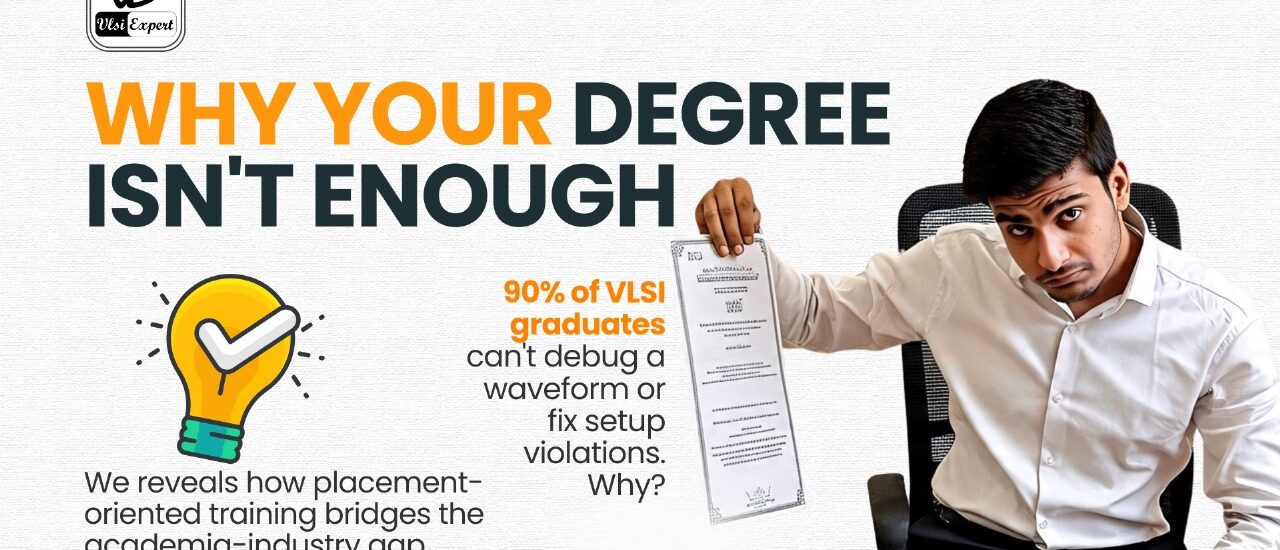
Semiconductor jobs are EDA tool-driven. Knowing how to read a waveform is different from debugging a waveform in Verdi.
Knowing what setup time means is different from fixing setup violations in PrimeTime.
Without hands-on exposure, students are not just unprepared—they’re unplaceable or replaceable.
Placement-oriented programs provide “guided tool access”, “project scenarios”, and industry workflows that academic labs often lack.
4. 🧑💻 Skill-Based Hiring Has Replaced Degree-Based Hiring
Recruiters no longer care only about degrees. They want proof of skills. (Please don’t come back and ask me that there are few companies still looking for a Degree. Frankly speaking they don’t have time to interview someone when they know that 80% or 90% candidates are not up to the mark.
Interviewers in today’s scenario – test whether a student can answer the concept-based questions logically OR answer it just like that. If we will make any change to the question or tweak the question – whether they answer or not, if answers – are they bluffing, or using hit and trial method. OR they become nervous.
They don’t care if you have good University or passed university exams with good score. They need to see that as part of skills.
Placement-oriented programs focus on “building and showcasing those skills”, so students can confidently clear technical interviews and assignments.
5. 🏫 The Academia-Industry Gap is Very Real
Colleges teach what is part of the syllabus, not what the industry uses. Most still focus on 20-year-old flows.
Industry, meanwhile, is working on 5nm, 3nm nodes, using advanced EDA tools and complex SoC integrations.
Without programs that mimic industry environments, students fall behind before they even start.
Placement-oriented programs act as a “bridge”—aligning what is taught with what is required.
6. 📈 High ROI on Time and Money
Families spend lakhs on engineering degrees, but many students end up in IT support or non-core jobs. Even I am seeing that people are doing Sales in Insurance. 🙂
A focused, placement-oriented program in VLSI can open doors to high-paying, core semiconductor jobs, giving better ROI on both time and money invested.
7. 📉 Mismatch Between Supply and Industry Demand
The semiconductor industry is booming globally and in India, but companies still report a shortage of skilled engineers.
The issue isn’t the number of graduates—it’s the lack of job-ready talent.
Placement-oriented programs focus on “quality over quantity”, producing engineers who are productive from Day 1.
💡 Section 2: How VLSI EXPERT® Is Driving Innovation & Solving These Challenges
✅ 1. “Foundation of VLSI Design” – One Course That Covers All
Instead of forcing a premature specialization, VLSI EXPERT® designed a course that covers:
RTL Design
System Verilog
Synthesis
STA
Physical Design
Analog Layout
DRC/LVS
Functional Verification
This gives students a 360° view of the industry, enabling informed decisions and better preparation for niche roles.
✅ 2. Support Till You Get Placed — We Mean It
We pioneered the “Support till Placement” model—ensuring students receive continuous mentoring, tool access, and mock interviews until they secure a job.
This is not easy on our part but —we’re committing to the growth of every student, regardless of their starting point.
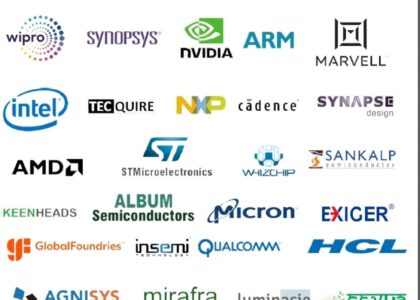
The outcome? Our alumni are placed in companies like Qualcomm, Samsung, Synopsys, NXP, and many more.
✅ 3. 24×7 Individual Tool Access — Not Shared, Not Limited
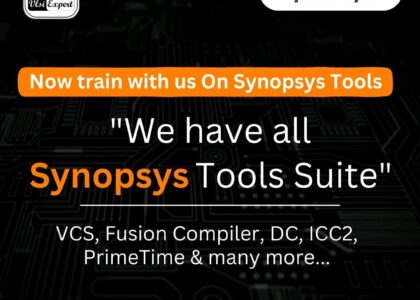
We’ve made a huge investment in Synopsys tools to acquire their whole suite —Like VCS, Design Compiler, ICC2, PrimeTime, Verdi, Custom Compiler, StarRCXT, ICV.
Students get their own login with 24×7 access, enabling real learning anytime, anywhere.
This is unheard of in most training institutes, where access is limited to 2 hours/day or shared systems.
✅ 4. Real Project Simulation with Industry-Driven Curriculum
At VLSI EXPERT®, students don’t just learn theory—they simulate real tapeout cycles.
From writing constraints to performing LVS to optimizing layout—they do it all under guided mentorship.
Trainers are working professionals who bring current industry problems into the classroom.
✅ 5. Tier-3 to Top Chip Firms — Our Transformation Stories
Our system or say process has transformed students from Tier-2/3 colleges with zero tool exposure and zero knowledge into VLSI Industry job-ready engineers placed in leading chip companies.
These aren’t exceptions—they are a result of a structured, committed placement ecosystem.
✅ 6. Beyond Courses — Career for Life
Even after placement, students stay connected through our community, career guidance, and alumni network.
Whether they want to switch roles, move abroad, or upskill—we stay with them.
🏁 Final Thought:
In today’s world, a “placement-oriented program” in VLSI is not just important—it’s essential to build a future-proof career in semiconductors.
And VLSI EXPERT® isn’t just providing such a program—we’re redefining how VLSI education should be delivered.